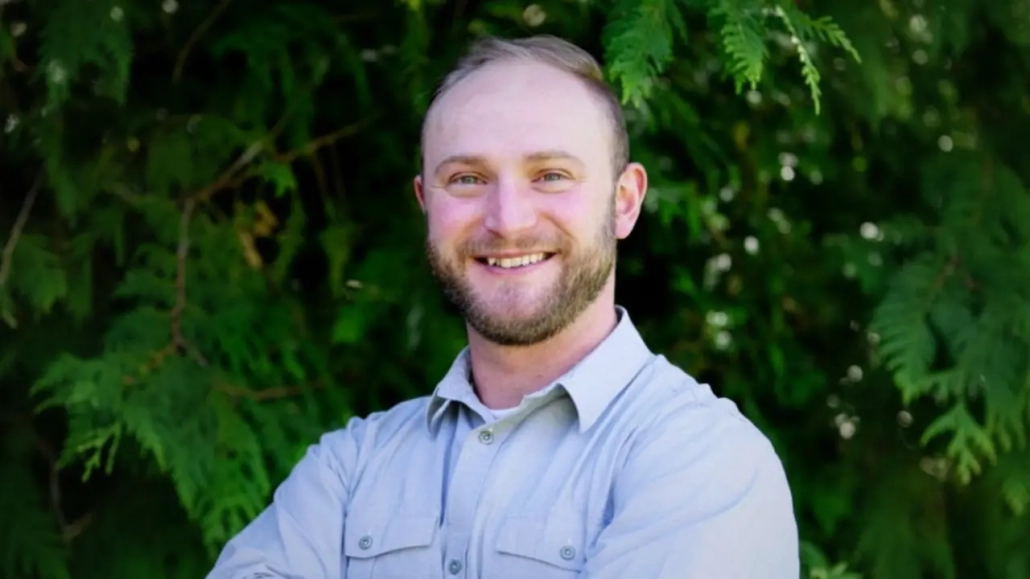
Meet David Friesen: Bringing Clarity, Capability, and Confidence to Industrial Rope Access Operations
In high-risk industrial environments, operations management is not a background function, it is the difference between a project that moves forward safely and one that stalls under pressure.
Whether the work takes place above energized tracks, over water, inside a confined space, or on aging steel infrastructure, the variables are many. The timelines are narrow, and the margin for error is small. In the world of industrial rope access operations, clarity and capability are essential.
At Peak Access, a company built on rope access trades that refuse to compromise on safety, schedule, or experience, this responsibility sits squarely with Operations Manager David Friesen.
David is the person who translates client urgency into actionable plans. He brings order to uncertainty and ensures the company’s rope access teams show up capable, compliant, and ready to deliver results. They often work in environments where traditional methods simply cannot perform.
This is the story behind the person leading those operations.
A Background Built on Complexity
When you ask David where he comes from professionally, he doesn’t give you a polished bio. He starts with the work, real work, and the environments that shaped him. Peak Access supports these same environments through highly coordinated industrial rope access operations.
“I’ve worked in construction for about 20 years,” he explains. “Oil and gas, heavy steel construction, manufacturing, environmental consulting… whether I was working with engineers, R&D teams, or in production, the job was always the same: bring clarity to chaos and deliver results.”
Before joining Peak Access, David spent more than a decade in oil and gas, followed by years in heavy steel construction. David worked in manufacturing, helping teams improve processes and collaborate better. He managed environmental projects and oversaw construction projects as a project manager.
Each of these roles built the operational reflexes he brings into Peak Access today. They gave him the ability to break down complex, high-risk work into predictable, manageable steps that protect people, timelines, and budgets.
Inside Peak Access:
What an Operations Manager Does in Industrial Rope Access Operations
When clients meet David for the first time, they often ask a simple version of a very big question: Who are you, and what do you actually do?
“I’m the Operations Manager,” David says, “and my role covers client communication, project management, team management, scheduling, coordination, quality control, health and safety… really, everything that keeps projects moving.”
But in practice, his role is best understood by what clients experience when Peak Access shows up:
They get clear answers. They get a plan they can trust. And they get people who solve problems rather than complicate them.
The way David describes it, operations management is not a checklist, it’s a form of responsibility. David oversees the project’s phases, choreographing the team to project completion. He ensures the right IRATA technicians are assigned to high-angle or confined-space work. The team relies on him to prepare rescue coverage and manage safety documentation. He aligns with the client’s procedures and checks that nothing is missing before the team rigs a single rope.
In other words, he ensures that every promise made to a client can be kept.
Answering the First Question Every Client Has
In the interview, David shared something that most industrial contractors know instinctively but don’t always say out loud: prospective clients usually have just one real question.
“Have you done this before?”And David doesn’t dance around it.
“Usually the answer is yes, maybe not in that exact scenario, but in some facet we’ve completed something similar and executed it successfully,” he says. “If I think our team can do the work safely and properly, I’ll tell a client that. And if we need additional expertise, I bring in the right people.”
This answer matters more than certifications alone.
Clients want to know they’re not hiring risk, they’re hiring experience. They want confidence that their maintenance, shutdown, coatings, rigging, welding, or rescue scope. David responds not by overselling, but by grounding his answer in operational reality.
His mindset strengthens the credibility of Peak Access’s capabilities. These include IRATA-certified rope access trades, AMPP coatings inspection and application, mechanical and rigging support, and rescue teams, the full operational package for high-risk maintenance.
At Peak Access, the answer to “Have you done this before?” is backed by documented QA/QC processes, compliance protocols, and a portfolio of work across ports, hydro sites, transit systems, bridges, wind turbines, and more. David’s confidence is not theoretical, it’s earned.
A Philosophy Rooted in Listening, Not Pitching
“My first priority is to listen,” he said. “I want to understand what problem they have and try to hear them out before deciding what solution they’re looking for.”
He’s not trying to “sell rope access.” He’s trying to understand the real constraint: time, access, safety, compliance, or operational continuity.
A project might come with a three-hour maintenance window in a public transit station. Another may involve corrosion over water. Some involve confined spaces where a rescue plan is non-negotiable. Others take place during a shutdown with zero tolerance for delay.
Listening first allows David to see which variables matter most. Only then does he match a solution: hybrid rope access crews, mechanical trades, coatings teams, rescue technicians, or a combination of all of them working under one coordinated plan.
This approach helps differentiate Peak Access. It turns a vendor relationship into a service partnership, and for industrial clients, who often carry enormous responsibility, that shift matters.
A Culture of Collaboration and Professionalism
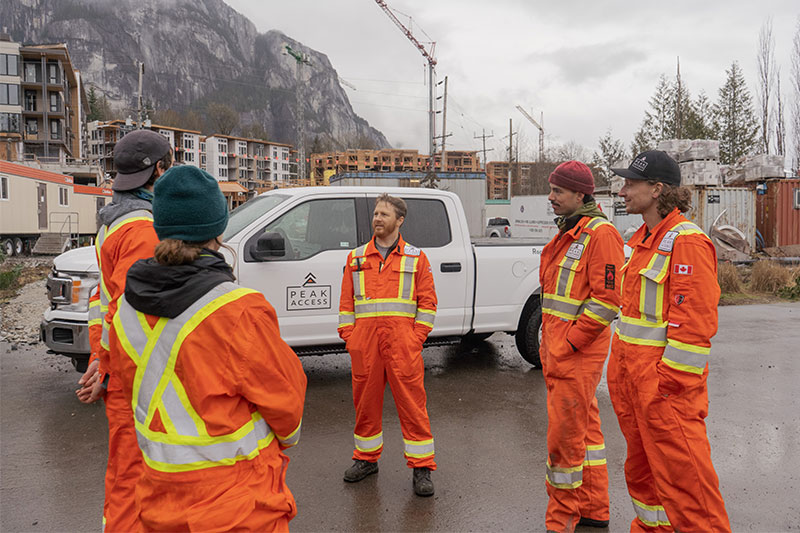
Across the company, from rope access technicians to coatings inspectors to rescue teams, Peak Access is known for something clients mention again and again: attitude.
Teams show up prepared, respectful, communicative, and aligned with the other contractors on site. David is a driving force behind this.
He ensures that teams understand the objective, the client’s version of success, not just the tasks. Peak Access technicians don’t show up to do isolated work. They show up to become part of the client’s team, working toward a shared outcome.
This collaborative mindset is why Peak Access crews integrate seamlessly on projects with multiple stakeholders, strict sequencing, or tight operational constraints.
What Clients Can Expect When David and the Team Arrive
If you boiled David’s message down to one promise, it would be this:
Predictability.
Clients can expect predictable schedules, strong communication, and safe execution.
As he put it near the end of the interview:
“If we’re on your site, we’re on your team. Our goal is the same as yours: get the work done safely, on schedule, and without disrupting your operations.”
In an industry where complexity always exists and certainty is rare, that kind of operations leadership becomes essential.
And at Peak Access, it’s the foundation on which every rope access trade crew, every rescue team, and every successful project is built. David sets this standard on every project and every industrial rope access operations plan Peak Access delivers.