
Confined Space Rescue Requirements in BC: What You Must Have On-Site
Confined space incidents are rarely the result of workers ignoring risk. More often, they happen because rescue planning was treated as a contingency instead of a requirement. Confined space rescue in BC cannot be improvised after an incident occurs; it must be planned, resourced, and ready before anyone enters the space.
For project managers, site superintendents, and safety leaders, this creates a clear responsibility. Before confined space work begins, recovery capability must already exist on site. Not documented in theory, not assumed through emergency services, but immediately available and deployable. Understanding what must be in place before entry is essential for compliance, worker safety, and keeping projects moving without regulatory interruption.
Why Confined Space Rescue in BC Is a Legal and Practical Requirement
A confined space is dangerous not because it is small, but because it limits a worker’s ability to escape when conditions change. These spaces often have restricted entry and exit points, poor natural ventilation, and environments that can deteriorate rapidly. Oxygen deficiency, toxic atmospheres, engulfment hazards, and mechanical risks can escalate in seconds, leaving a worker unable to exit on their own.
In British Columbia, the expectation is clear: if a worker cannot safely self-rescue, a recovery plan must already exist. That plan must be realistic, specific to the hazards of the space, and capable of being executed immediately. This requirement exists because delays during confined space incidents are frequently fatal. Waiting for outside help is not an acceptable strategy when seconds matter.
What Rescue Capability Means Under BC Regulations
Recovery planning is often misunderstood as simply having paperwork or emergency contact information on hand. In practice, it refers to the real-world ability to remove a worker from a confined space quickly and safely, without placing additional people at risk.
Under BC regulations, recovery capability must match the space and the task. A shallow utility vault presents different challenges than a deep tank with mechanical hazards or vertical access. Plans that are generic or theoretical do not satisfy regulatory intent if they cannot be executed in real conditions.
This is why rescue readiness is considered an operational capability. It requires trained personnel, appropriate equipment, and a clear understanding of hazards. Documentation supports the process, but it does not replace preparedness.
How WorkSafeBC Assesses Rescue Readiness
WorkSafeBC approaches confined space recovery from a practical enforcement perspective. Inspectors are not only reviewing written plans; they are evaluating whether a rescue could realistically be carried out if an incident occurred at that moment.
From a regulatory standpoint, rescue arrangements must be suitable for the hazards identified and must not rely on external responders as the primary solution. Inspectors may ask how quickly recovery could begin, who would perform it, and whether those individuals are trained and equipped for the task.
If a rescue plan cannot be executed without delay, it does not meet expectations, regardless of how well it is written.
According to WorkSafeBC’s confined space regulation, rescue arrangements must be suitable for the space, hazards, and work being performed.
Why Emergency Services Cannot Be the Primary Rescue Method
One of the most persistent misconceptions on industrial sites is the belief that calling 911 satisfies rescue obligations. In British Columbia, this is not the case.
Emergency responders are not typically equipped or trained to perform site-specific confined space recoveries. They may not be familiar with the layout, hazards, or access limitations of the space. Even under ideal conditions, response times introduce delays that are unacceptable when a worker is incapacitated.
Emergency services may support an incident after a worker is removed, but they cannot replace on-site readiness. This distinction is critical and frequently enforced during inspections.
What On-Site Rescue Capability Means Under BC Regulations
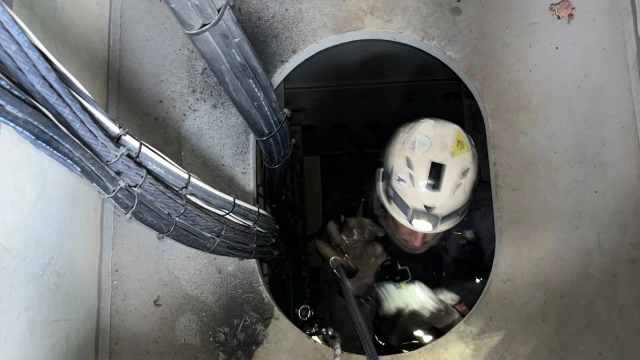
Before any worker enters a confined space in BC, recovery capability must already be established. This means trained personnel are identified and present, equipment is on site and suitable for the space, and procedures reflect actual conditions rather than assumptions.
Rescue readiness must also be coordinated with the entry team. Monitoring, communication, and recovery functions cannot operate independently. They must work together as a single system designed to prevent escalation if conditions change.
This level of preparation ensures recovery planning is functional, not theoretical.
Why This Matters for Project Managers and Superintendents
For those responsible for authorizing confined space work, rescue readiness is not just a safety issue. It is a project risk issue. Inadequate planning can lead to rejected permits, work stoppages, enforcement actions, and unplanned delays.
When recovery planning is addressed early and correctly, permit approvals move faster and work proceeds with fewer interruptions. It also protects decision-makers by demonstrating that risks were identified and controlled in line with regulatory expectations.
Common Gaps Observed on Industrial Sites
Across industrial projects, the same issues appear repeatedly. Plans exist on paper but cannot be executed due to missing equipment or insufficient training. Assigned rescue personnel are unfamiliar with the specific space. Equipment is present but unsuitable for the depth or configuration involved.
These gaps often emerge under schedule pressure, when confined space work is treated as routine rather than high-risk. Identifying and correcting them early prevents incidents and inspection failures.
Recovery Planning in Live and High-Risk Environments
Rescue planning becomes even more critical in operating plants, ports, and infrastructure sites. Limited shutdown windows, concurrent work, and public exposure increase the consequences of failure.
In these environments, recovery capability must be integrated into overall site planning rather than treated as a standalone safety task. When done properly, confined space work can proceed safely without disrupting operations or attracting regulatory scrutiny.
For complex or high-risk sites, this work is often supported by specialized confined space and high-angle rescue teams experienced in live industrial environments.
Readiness Is What Prevents Escalation
In British Columbia, confined space recovery capability must exist before work begins, not after something goes wrong. It is defined by readiness, immediacy, and execution—not paperwork alone.
When planned and implemented correctly, this approach prevents incidents from escalating, protects workers, and keeps projects moving. Preparedness is what turns a regulatory obligation into a practical safeguard.