Maintenance Support During Limited Outages: Reliable Execution When Time Is Tight

Emergency and unplanned shutdowns rarely arrive with ideal conditions. Maintenance support during limited outages places intense pressure on project managers, compressing decision-making and reducing margin for error.

In these scenarios, success is not defined by how quickly a contractor can arrive on site. It is defined by whether the planned work is completed safely, within the available window, and without creating new risks. Reliable maintenance support during limited outages is not about speed alone. It is about readiness, experience, and predictable execution when conditions are least forgiving.

Maintenance Support During Limited Outages Leaves No Margin for Error

Short shutdown windows expose a reality that is easy to overlook during routine maintenance: time does not forgive poor preparation. When access, sequencing, or safety planning falters, there is no opportunity to recover lost hours.

Project managers know this pressure well. Emergency outages often require maintenance to begin immediately, sometimes in parallel with troubleshooting, isolation, or stabilization activities. Work must proceed in active, high-risk environments where conditions are evolving and information is incomplete.

In time-critical environments, industry guidance on asset integrity and maintenance planning reinforces the importance of readiness and execution during outages.

Why “Fast Response” Is Not the Same as Reliability

Many contractors position themselves as fast to mobilize. Speed has value, but it is not the same as reliability. A crew arriving quickly does not guarantee that work will progress as planned once they are on site.

Reliable maintenance support is measured by outcomes, not arrival times. It asks different questions:
Can the team execute safely in unfamiliar or degraded conditions?
Can they work within partial access or changing constraints?
Can they complete critical tasks without resetting plans mid-shift?

In short shutdown windows, reliability means that what was planned is what actually gets done.

The Common Failure Points in Emergency Shutdowns

Emergency outages tend to fail for predictable reasons. Access plans assume ideal conditions that do not exist. Crews encounter hazards they have not worked around before. Coordination breaks down as multiple trades compete for limited space and time.

These failures are rarely the result of negligence. More often, they stem from teams that are capable under normal conditions but unprepared for compressed, high-risk environments. When shutdown windows are tight, there is no room for learning curves.

This is why experience matters more than intent during emergency maintenance.

Readiness Is Built Before the Call Comes In

True readiness cannot be assembled during an outage. It is the product of teams that routinely operate in hazardous, time-constrained environments and understand how to execute under pressure.

For maintenance support providers, readiness means familiarity with working at height, in confined or congested spaces, and around live systems. It means safety systems, rescue planning, and access strategies are already established and adaptable, not invented on the fly.

For project managers, readiness is what allows work to begin with confidence instead of hesitation.

Predictable Execution Under Pressure

In limited outage windows, predictability becomes the most valuable attribute a contractor can offer. Predictable execution does not mean conditions will be easy. It means the team understands how to manage complexity without creating delays.

This includes realistic sequencing, disciplined scope control, and the ability to adjust when conditions change without losing focus on critical tasks. It also means knowing when not to push beyond safe or achievable limits, even when time is tight.

In practice, maintenance support during limited outages succeeds only when execution is predictable and teams are prepared to work inside real constraints.

Availability Is More Than Being On Call

Availability is often misunderstood as willingness to respond at any hour. While schedule flexibility is important, true availability is about capacity and resilience.

Reliable maintenance support during short shutdown windows requires enough depth to staff work safely, adapt to schedule shifts, and sustain performance across extended or irregular hours. It also requires teams accustomed to working nights, weekends, and holidays without degradation in safety or execution quality.

For project managers, availability is valuable only when it supports consistent outcomes.
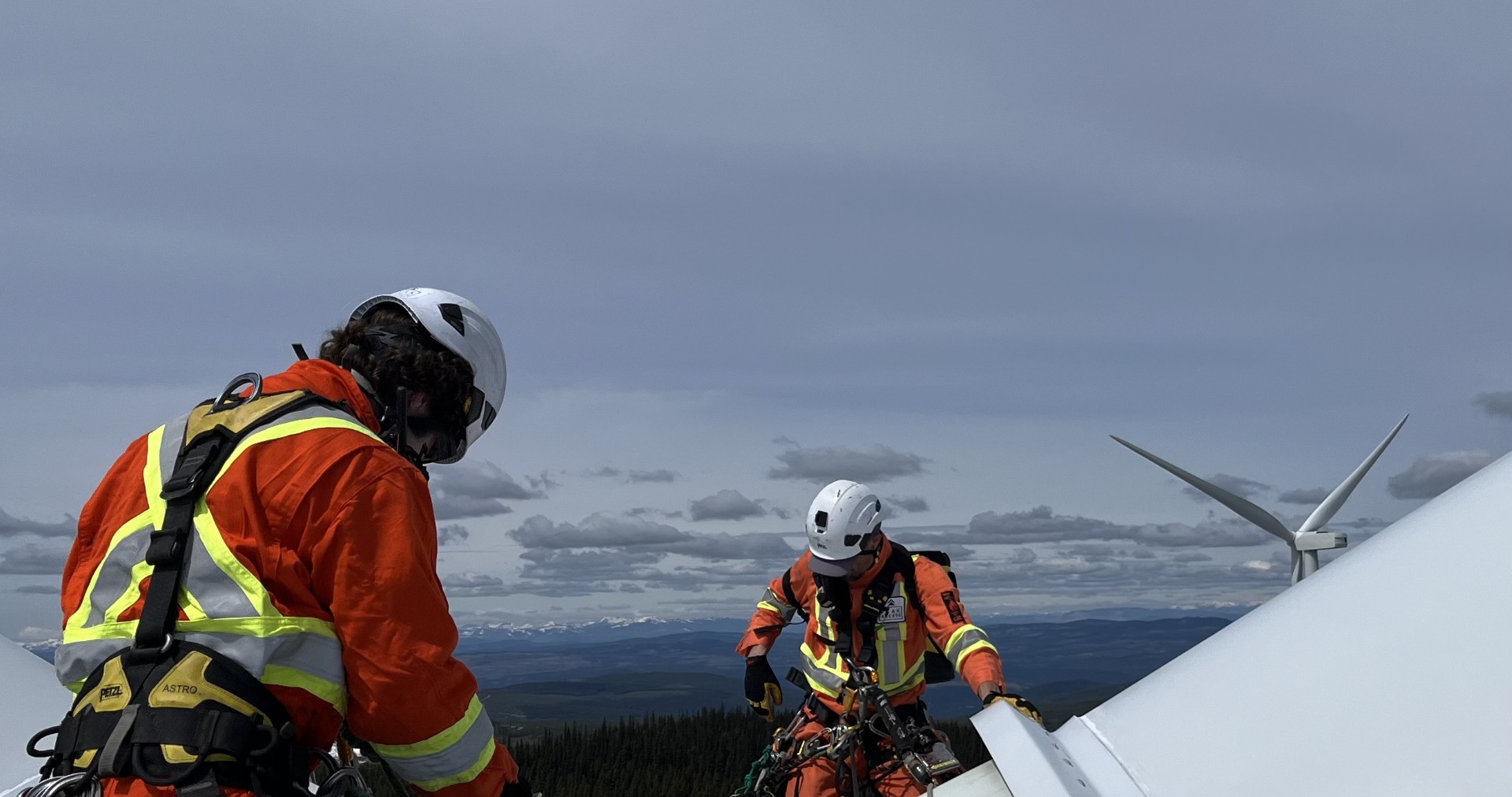
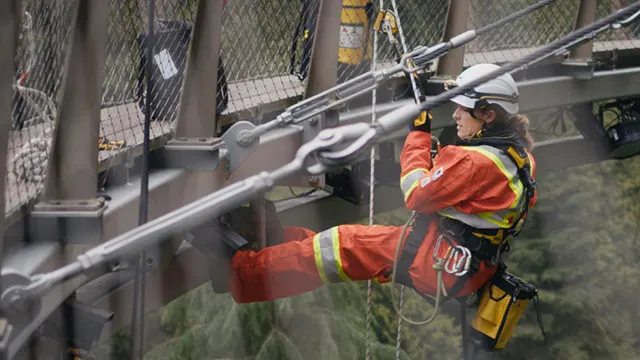
man scaling with rope access

Working Safely Inside High-Risk, Time-Constrained Environments

Emergency shutdowns often occur in environments that are already compromised. Equipment may be unstable, access limited, and conditions changing rapidly. Maintenance support in these settings must prioritize safety without slowing execution unnecessarily.

This balance is achieved through experience, clear role definition, and disciplined communication. Teams that are familiar with high-risk environments understand how to operate deliberately even when urgency is high.

Safety, in this context, is not a barrier to progress. It is what prevents the outage from becoming something worse.

What Project Managers Should Look for When Time Is Limited

When evaluating maintenance support for emergency or unplanned shutdowns, project managers benefit from looking beyond promises of speed. The more relevant indicators are experience in similar conditions, clarity of execution approach, and evidence of predictable delivery under pressure.

Contractors who can explain how they manage compressed timelines, changing conditions, and safety controls are far more likely to perform reliably when the window is tight.

Reliability Is Proven When Conditions Are Not Ideal

Anyone can perform well when time is abundant and conditions are controlled. Reliability is revealed when the window is short, the environment is challenging, and expectations are high.

For project managers responsible for emergency maintenance, reliable support is not about heroics or last-minute recoveries. It is about calm, prepared execution that delivers exactly what was planned, safely and within the available time.

When shutdown windows are tight, readiness and predictability are what keep projects on track. For project managers, maintenance support during limited outages is ultimately about confidence that planned work will be completed safely within the time available.
Tank Inspection Support Using Rope Access: Safer, Faster, No Scaffolding Needed

Tank inspections are rarely delayed because inspectors are unavailable. More often, they stall because access is not ready. On industrial sites, tanks are frequently located in congested areas, elevated positions, or operating facilities where building temporary access is complex, time-consuming, and disruptive. For project managers, this creates a familiar problem: the inspection scope is defined, the inspector is booked, but access becomes the critical path.

This is where tank inspection services supported by rope access change how inspections are planned and executed. Rather than overbuilding access for areas that may only require brief visual assessment, rope access allows inspection teams to reach exactly where they need to go, safely, efficiently, and with minimal impact on the site.

Why Access Is the Bottleneck in Many Tank Inspections

On paper, tank inspections are straightforward. Inspectors need to visually assess shell condition, welds, nozzles, roofs, or internal surfaces depending on the scope. In practice, access often dictates how much of that scope can actually be completed.

Industrial tanks are rarely isolated. They sit among piping, equipment, structures, and live operations. Shutdown windows are limited, and inspection durations are often short. When access planning does not match these realities, inspections are delayed, compressed, or broken into multiple phases.

For project managers, this creates schedule risk and coordination challenges that have nothing to do with inspection quality and everything to do with access strategy.

What “Tank Inspection Services” Mean in This Context

It is important to be clear about roles. Tank inspection services typically involve certified third-party inspectors responsible for evaluating condition, identifying defects, and determining compliance with applicable standards or owner requirements.

Rope access teams do not replace that role. Instead, they support tank inspection services by providing safe, controlled visual access to inspection areas that would otherwise be difficult or impractical to reach. Their responsibility is access, positioning, and safety systems—not inspection authority or certification.

This separation of roles allows inspectors to focus on assessment while access specialists ensure they can reach the right locations efficiently.

The Problem With Overbuilt Access for Visual Inspections

Many tank inspections require targeted visual assessment rather than continuous access around the entire structure. However, access solutions are often designed as if every surface must be reached equally, regardless of actual inspection need.

This mismatch leads to unnecessary complexity. Time is spent mobilizing access that may only be used briefly, and site disruption increases as more space is taken up by temporary systems. In live facilities, this can introduce additional safety risks related to congestion and simultaneous operations.

From a project management perspective, the issue is not that access is unsafe, it is that it is frequently misaligned with the inspection scope.

How Rope Access Supports Visual Tank Inspections

Rope access inspection support is built around flexibility. Access technicians can position inspectors precisely where visual confirmation is required, move with the inspection as findings evolve, and disengage once the assessment is complete.

If an inspector identifies an area requiring closer review, access can be adjusted in real time without rebuilding systems or halting work. This responsiveness is particularly valuable during exploratory or condition-based inspections, where the scope may change as information is gathered.

For tank inspection services, this means inspection effort stays focused on evaluation rather than logistics.

Industrial tank inspection

Safety and Control During Inspection Support

For project managers, safety is not negotiable, especially when inspections occur at height or in constrained environments. Rope access inspection support operates under strict safety frameworks, including defined rescue capability, redundant systems, and clear role separation between access and inspection functions.

Organizations such as IRATA International establish globally recognized standards governing rope access training, supervision, and execution. These standards ensure that access systems are planned, reviewed, and implemented with safety as the primary control.

When integrated correctly, rope access does not introduce additional risk. Instead, it provides a controlled method of reaching inspection areas without expanding the site footprint.

Scheduling Advantages for Project Managers

One of the most immediate benefits of rope access inspection support is scheduling flexibility. Access systems can be mobilized quickly, adapted to short inspection windows, and removed without extended demobilization periods.

This allows tank inspection services to proceed when access would otherwise delay the start of work. In shutdown scenarios, rope access can be aligned with inspection sequences rather than dictating them. In live environments, inspections can often be completed without altering normal operations.

For project managers juggling multiple stakeholders, this flexibility reduces pressure on schedules and limits the cascading impact of inspection delays.

Matching Access Effort to Inspection Need

Not every tank inspection requires full-surface access. Many inspections are localized, confirmatory, or focused on known areas of concern. Rope access supports these inspections by allowing access effort to scale with inspection need.

This precision helps avoid the common situation where access planning assumes worst-case requirements. Instead, access is deployed where inspection value is highest, and resources are conserved elsewhere.

For projects with tight budgets and timelines, this approach supports better alignment between scope, cost, and outcome.

Integrating Rope Access Into Inspection Planning

The most successful tank inspection services are planned collaboratively. When project managers involve access specialists early, alongside inspectors, access strategies can be tailored to inspection objectives rather than retrofitted later.

Early coordination clarifies where access is truly required, how inspectors will move through the scope, and how safety responsibilities are managed. This reduces last-minute changes, improves predictability, and supports smoother execution on site.

Rope access works best when it is treated as part of inspection planning, not as an afterthought.

Tank Inspection Support Is About Precision, Not Speed

While rope access can shorten timelines, its real value lies in precision. By matching access to inspection requirements, it allows inspections to be completed thoroughly without unnecessary build-out or disruption.

For project managers, this means fewer compromises between safety, schedule, and inspection quality. Tank inspection services supported by rope access are not about doing more work faster, they are about doing the right work with the right level of access.

When access is aligned with inspection intent, inspections become easier to plan, safer to execute, and more reliable in their outcomes.

For projects requiring flexible, site-specific access, rope access inspection support can be integrated into tank inspection planning to reduce disruption and improve execution.

Rope Access Inspections: Why Traditional Inspection Methods Often Fail

For safety and HSE leaders, inspections are not just a technical requirement—they are a frontline control against incidents, failures, and regulatory exposure. When inspections fall short, risks don’t disappear. They go undocumented, unmanaged, and unresolved until they surface as incidents, near misses, or audit findings.

Many inspection programs fail not because teams are careless or undertrained, but because the inspection method itself limits what can be seen, reached, or verified. In environments where assets are elevated, complex, or difficult to access, traditional inspection approaches often introduce blind spots that undermine safety objectives. This is where rope access inspections change the equation.

Why Inspection Failure Is Often an Access Problem

Most inspection shortcomings trace back to one root cause: inspectors cannot safely or practically reach the areas that matter most. As a result, inspections are adapted to what is accessible rather than what is critical.

From a safety perspective, this creates a dangerous mismatch. Hazards such as corrosion, cracking, loose fixings, degraded coatings, or structural movement rarely occur in convenient locations. They develop on undersides, vertical faces, interfaces, and transition points that are difficult to observe from a distance.

When inspectors are forced to rely on partial visibility, indirect observation, or assumptions about condition, the inspection may appear complete on paper while leaving real risks unaddressed.

Rope Access Inspections

The Limits of Visual-Only and Distance-Based Inspections

Visual inspections performed from the ground or from fixed vantage points are often treated as sufficient for routine assessments. While these methods can identify obvious defects, they struggle to detect early-stage issues that pose long-term safety risks.

Hairline cracking, early corrosion, coating breakdown, or minor displacement may not be visible without close access. Over time, these small issues can evolve into significant hazards that affect structural integrity or worker safety.

For HSE leaders, this creates a false sense of security. Documentation may indicate that inspections were completed, but the data collected may not be robust enough to support confident risk assessments or maintenance decisions.

How Rope Access Inspections Address These Gaps

Rope access inspections are designed to eliminate the access limitations that undermine inspection quality, allowing safety teams to verify conditions directly rather than relying on assumptions.

By allowing trained inspectors to reach elevated, vertical, or inverted surfaces directly, this method enables close-contact assessment without compromising safety.

Rather than inspecting around obstacles or from a distance, inspectors can position themselves exactly where hazards are most likely to develop. This improves defect detection, condition assessment, and confidence in inspection findings.

For safety programs, the benefit is clear: risks are identified based on observed conditions, not inferred ones.

Safety Standards Behind Rope Access Inspections

Rope access inspections are governed by rigorous safety frameworks. IRATA International establishes global standards for training, supervision, equipment, and rescue planning through its Code of Practice.

These standards require redundancy in access systems, formal risk assessments, and competency verification for all personnel involved. For HSE leaders, this provides assurance that rope access inspections are not improvised solutions, but structured operations designed to control risk in challenging environments.

The result is an inspection method that prioritizes both access safety and inspection integrity.

Inspection Quality and Hazard Identification

One of the most significant advantages of rope access inspections is the improvement in hazard identification. Close access allows inspectors to verify conditions directly, confirm severity, and distinguish between cosmetic issues and safety-critical defects.

This level of detail supports more accurate risk registers, clearer maintenance priorities, and better-informed safety decisions. It also reduces reliance on conservative assumptions that can lead to unnecessary restrictions or reactive interventions later.

For HSE leaders, improved inspection quality translates into stronger defensibility during audits and incident investigations.

Rope Access Inspections in Live and High-Risk Environments

Many industrial and infrastructure assets must remain operational while inspections are conducted. In these live environments, inspection methods that require extensive site disruption can introduce additional safety risks, including congestion, simultaneous operations, and restricted egress.

Rope access inspections are well suited to these conditions because they require minimal physical footprint. Access systems are localized, allowing inspections to proceed without altering site layouts or interfering with ongoing work.

This supports safer coordination between inspection teams and operations, reducing secondary risks introduced by the inspection process itself.

Documentation, Compliance, and Audit Readiness

From a compliance standpoint, the value of an inspection lies not only in identifying hazards, but in documenting how risks were assessed and controlled. Rope access inspections produce clearer, more defensible records because findings are based on direct observation.

Photographic evidence, condition descriptions, and inspector notes are tied to specific locations and access points. This level of documentation strengthens compliance reporting and supports transparent communication with regulators, insurers, and internal stakeholders.

For HSE leaders, this clarity reduces ambiguity and strengthens confidence in inspection outcomes.

Why Traditional Inspection Programs Struggle to Evolve

Inspection programs often persist with familiar methods because they appear simpler or more economical in the short term. However, when these methods fail to identify emerging risks, the long-term safety and financial costs increase.

Rope access inspections represent a shift toward risk-based inspection planning, where access is selected based on hazard exposure rather than convenience. This shift aligns inspection practices with modern safety management systems that emphasize proactive risk identification.

When Rope Access Inspections Should Be Considered

Rope access inspections are particularly effective when assets are elevated, complex, or difficult to reach; when safety risks are concentrated in localized areas; or when inspections must be performed without disrupting operations.

They are commonly used as part of baseline condition assessments, targeted follow-up inspections, and pre-maintenance evaluations where accuracy and safety are critical.

For HSE leaders, incorporating rope access inspections into the inspection toolkit provides flexibility to match inspection method to risk profile.

Rope Access Inspections Support Safer Decisions

At their core, rope access inspections are about improving decision-making. By removing access barriers, they allow safety leaders to base risk assessments on what is actually happening on the asset, not on assumptions or incomplete information.

Traditional inspection methods often fail quietly, leaving hazards undiscovered until consequences emerge. Rope access inspections address this failure mode directly, providing safer access, clearer insight, and stronger support for proactive safety management.

For organizations committed to preventing incidents rather than reacting to them, this approach delivers both safety and operational value.

Rope Access vs Scaffolding: Cost, Downtime & Safety for Industrial Sites

The decision between rope access vs scaffolding is rarely just about access. For industrial project managers, it is a decision that quietly determines whether a project stays on schedule, whether a shutdown runs long, and whether safety approvals move smoothly or become a bottleneck. Yet access planning is often treated as an afterthought, defaulting to scaffolding simply because it feels familiar.

In reality, access methods shape cost, downtime, safety exposure, and coordination complexity. Understanding how rope access and scaffolding differ in real industrial conditions, not theoretical ones, can help project managers make decisions that protect both schedules and reputations.

How Rope Access vs Scaffolding Differ in Practice

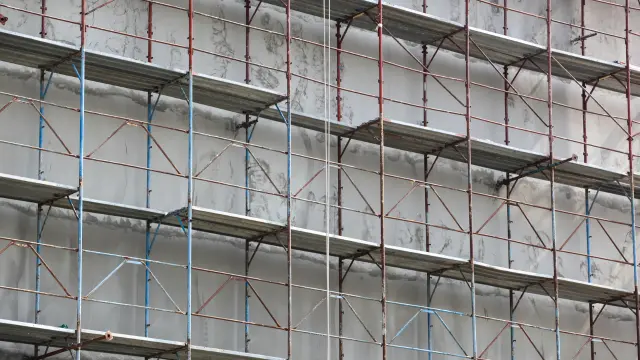
scaffolding

Scaffolding has long been the standard approach on industrial sites. It provides a physical platform that allows crews to work with tools and materials at height. However, what is often overlooked is the amount of work required before any productive task can begin. Scaffolding must be engineered, transported, erected, inspected, modified as scopes change, and eventually dismantled. Each of those steps consumes time and introduces additional coordination and safety exposure.

Industrial rope access works differently. Certified rope access technicians use redundant rope systems to reach work areas directly. The setup is fast, the footprint is small, and access can often be established the same day crews mobilize. Instead of building access first and then starting work, rope access allows work to begin almost immediately.

This difference becomes critical on industrial projects where time is limited and access windows are tight. The faster work can start, the less pressure there is on the rest of the schedule.

Rope Access

The Real Cost Question: Rope Access vs Scaffolding

When comparing rope access vs scaffolding, cost discussions often start in the wrong place. Hourly labor rates or daily crew costs rarely tell the full story. What matters to a project manager is total project cost, not just the price of access itself.

Scaffolding carries hidden costs that accumulate quickly. Engineering, erection, and dismantling can consume days or even weeks on complex sites. During that time, other work is often delayed or forced to work around incomplete access. Larger crews are required, and each additional worker increases both cost and safety exposure.

The cost of rope access is structured differently. Rope access technicians are highly trained and certified, which can make individual labor rates appear higher. However, far fewer people are required, and the time spent setting up access is dramatically reduced. When projects are evaluated based on total duration and manpower rather than line-item rates, rope access frequently results in a lower overall cost.

For industrial project managers, the key question is not which method is cheaper per hour, but which one allows the work to be completed faster and with fewer disruptions.

Downtime: The Hidden Driver Behind Most Access Decisions

Downtime is often the most expensive aspect of industrial maintenance and repair, even when it is not clearly visible in the budget. Production losses, delayed commissioning, and extended shutdowns can quickly outweigh the direct cost of access.

Scaffolding tends to extend downtime because work cannot begin until access is fully erected. If the scope changes, additional time may be required to modify the scaffold. In short shutdown windows, scaffolding alone can consume most of the available time.

Rope access is particularly effective in environments where downtime must be minimized. Because access can be established quickly and adjusted easily, rope access teams can work within short windows, overnight shifts, or during off-hours. This flexibility allows maintenance and inspection work to proceed without extending shutdowns or interrupting live operations.

For project managers responsible for keeping assets running, this ability to reduce shutdown downtime is often the deciding factor.

Safety in Context: Perception vs Reality

Safety is a non-negotiable priority on industrial sites, and perceptions around safety often influence access decisions. Scaffolding is sometimes assumed to be safer simply because it feels more solid. In practice, safety outcomes depend far more on systems, training, and exposure than on how access looks.

Industrial rope access is governed by strict international standards, including IRATA certification. These systems are built around redundancy, continuous attachment, and integrated rescue capability. Every rope access job includes a rescue plan executed by trained personnel already on site.

Scaffolding introduces different risks. The erection and dismantling phases expose large crews to working at height. More people at height increases the potential for incidents, dropped objects, and coordination errors. Each additional interface between trades adds complexity to safety management.

From a project manager’s perspective, safety is also about approvals, audits, and confidence. Rope access simplifies this by combining access, execution, and rescue into one controlled system, reducing the number of variables that must be managed.

Why Experience Matters More Than the Method

One of the most important factors in the rope access vs scaffolding decision is often overlooked: contractor experience. Industrial rope access is not the same as building maintenance or façade work. It requires an understanding of industrial environments, live operations, and coordination with multiple stakeholders.

Experienced industrial rope access teams plan work around operational constraints, communicate clearly with other trades, and anticipate safety and scheduling challenges before they become problems. Inexperienced teams, regardless of access method, introduce risk.

For project managers, this matters because accountability ultimately rests with them. Choosing an access method without considering execution experience can lead to delays, safety concerns, and unwanted scrutiny.

When Scaffolding Still Makes Sense

There are situations where scaffolding remains the right choice. Long-duration projects that require continuous access over large areas may benefit from permanent platforms. Repetitive work performed over months can justify the upfront investment in scaffolding.

However, for inspections, targeted repairs, coatings touch-ups, and work performed under tight schedules or in live environments, rope access often provides a more efficient and lower-risk solution.

The decision should be based on scope duration, schedule pressure, and operational sensitivity rather than habit or tradition.

Making the Right Decision as a Project Manager

Ultimately, the rope access vs scaffolding decision should be evaluated through a practical lens. How quickly can work begin? How much downtime does access alone introduce? Who owns rescue and compliance? How flexible is the plan if conditions change?

When these questions are answered honestly, the most effective access method usually becomes clear. If you’d like help evaluating rope access versus scaffolding for your specific site, contact our team to talk through scope, risk, and schedule before work begins.

Access Is a Strategic Choice

The choice between rope access vs scaffolding is not just about getting people to work areas. It is a strategic project decision that affects cost control, downtime, safety confidence, and professional credibility.

For industrial project managers operating under pressure, rope access offers a proven way to reduce disruption, protect schedules, and execute work safely when margins for error are small. When planned early and delivered by experienced industrial teams, it is not an alternative, it is often the smarter first option.

How AMPP Coating Inspections Work (And Why They Prevent Corrosion Failures)

Corrosion rarely starts with a dramatic failure. In most industrial environments, it begins quietly—beneath coatings that appear intact, inside areas that are hard to access, or in conditions that are easy to overlook when schedules are tight. By the time corrosion becomes visible, the opportunity for low-cost intervention has usually passed. This is why corrosion inspection is not a reactive task, but a preventive one.

At its core, corrosion happens when metal reacts with its surrounding environment. Moisture, oxygen, salts, industrial chemicals, and temperature changes combine to create electrochemical reactions that slowly degrade steel and other metals. Protective coatings are designed to interrupt that process, but coatings only work when they are properly selected, applied, and verified. Without inspection, corrosion is not prevented—it is merely delayed until failure becomes unavoidable.

This is where structured inspection under recognized standards becomes one of the most effective tools project managers have for controlling long-term asset risk.

What Corrosion Inspection Really Means on an Industrial Site

Corrossion Inspection

Corrosion inspection is often misunderstood as a visual check performed after coating work is complete. In practice, that approach catches problems too late. Effective corrosion inspection is a continuous process that begins before surface preparation starts and continues through application and curing.

On an industrial site, corrosion inspection connects technical execution with decision-making. It verifies that surfaces are properly prepared for the environment they will be exposed to, that coatings are applied under suitable conditions, and that the finished system meets performance requirements, not just aesthetic ones. For project managers, corrosion inspection provides assurance that today’s work will not become tomorrow’s failure.

Rather than focusing on what looks acceptable at the end of a shift, corrosion inspection focuses on whether the conditions that cause corrosion have been adequately controlled throughout the work.

How AMPP-Based Corrosion Inspection Works in Practice

In real-world industrial projects, inspection unfolds alongside the work itself. It begins with an assessment of existing conditions, identifying contamination, deterioration, or environmental factors that could compromise coating performance. Surface preparation is then reviewed to confirm that the substrate is suitable for coating adhesion and long-term protection.

During coating application, inspectors focus on conditions that directly influence performance. Temperature, humidity, surface cleanliness, and application technique all affect how a coating cures and bonds. These variables cannot be corrected after the fact, which is why inspection during execution is often more critical than final approval.

After application, corrosion inspection confirms that the protective system meets specified thickness, continuity, and coverage requirements. At this stage, verification ensures that the intended corrosion protection system has actually been achieved—not merely applied.

This structured approach aligns with standards published by AMPP, which exist to remove subjectivity from coating evaluation and failure analysis.
Learn more about AMPP standards at: https://www.ampp.org

Why Corrosion Failures Usually Start Before Damage Is Visible

One of the most costly misconceptions in asset maintenance is the belief that corrosion is obvious when it begins. In reality, deterioration often develops beneath coatings that still appear intact. Microscopic failures in surface preparation, coating thickness, or curing conditions allow moisture and contaminants to reach the substrate long before rust appears.

When inspection is incomplete or rushed, these early warning signs go undocumented. The coating may pass a visual review, but its protective function has already been compromised. Months or years later, blistering, delamination, or structural degradation emerges, often during operations when repair is most disruptive.

From a project management perspective, this is where accountability becomes uncomfortable. Failures are rarely attributed to a single decision, but they almost always trace back to missed inspection steps or undocumented conditions during execution.

Inspection as a Risk-Control Tool for Project Managers

For project managers, inspection is not just about technical compliance—it is about managing long-term risk. Proper inspection reduces uncertainty around asset performance, limits the likelihood of rework, and protects budgets from unplanned rehabilitation.

Inspection also plays a critical role in coordination. When requirements are clearly defined and enforced, expectations between owners, contractors, and inspectors are aligned. This reduces disputes and prevents last-minute compromises when schedules are under pressure.

Perhaps most importantly, inspection shifts risk away from individuals and toward documented process. When carried out under recognized standards, decisions are supported by data rather than judgment alone.

Environmental Factors That Increase Corrosion Risk in British Columbia and Alberta

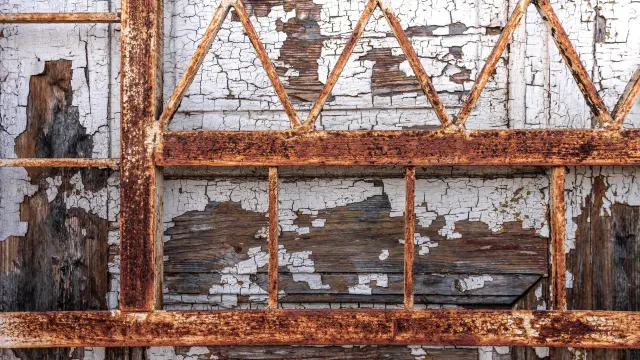
Close up of rusty metal background

In regions such as British Columbia and Alberta, environmental exposure significantly increases corrosion risk. Coastal salt exposure, high humidity, freeze-thaw cycles, and industrial emissions accelerate degradation mechanisms and place greater demands on protective coating systems.

In these environments, inspection becomes even more critical. Small deviations in surface preparation or application conditions can dramatically shorten coating life. Verification under AMPP-aligned practices helps ensure that coatings are suited not only to the asset, but also to the environment in which it operates.

For projects in Western Canada, inspection quality is often the difference between coatings that last as intended and coatings that fail years ahead of schedule.

When Inspection Matters Most in the Project Lifecycle

While inspection adds value at every stage, its impact is greatest during initial construction, maintenance shutdowns, and rehabilitation work. These phases determine the baseline condition of assets and establish how effectively corrosion will be controlled over time.

Early inspection prevents defects from being built into the system. During shutdowns, it ensures that limited access windows are used effectively. During rehabilitation, it confirms that repairs address root causes rather than symptoms.

In each case, inspection supports informed decision-making rather than reactive correction.

Corrosion Inspection Is About Prevention, Not Paperwork

Corrosion inspection is often viewed as a compliance requirement, but its real value lies in prevention. By identifying and controlling the conditions that cause corrosion before damage occurs, inspection protects asset life, project budgets, and professional credibility.

When guided by AMPP standards, inspection becomes a structured, defensible process rather than a subjective opinion. For project managers responsible for long-term performance, it offers control in an environment where failure is often discovered too late to avoid.

Corrosion does not fail suddenly. Inspection exists to ensure it never has the chance to start.

For complex or high-risk assets, this work is often supported by specialized rope access inspection and coating teams experienced in live industrial environments.

Confined Space Rescue Requirements in BC: What You Must Have On-Site

Confined space incidents are rarely the result of workers ignoring risk. More often, they happen because rescue planning was treated as a contingency instead of a requirement. Confined space rescue in BC cannot be improvised after an incident occurs; it must be planned, resourced, and ready before anyone enters the space.

For project managers, site superintendents, and safety leaders, this creates a clear responsibility. Before confined space work begins, recovery capability must already exist on site. Not documented in theory, not assumed through emergency services, but immediately available and deployable. Understanding what must be in place before entry is essential for compliance, worker safety, and keeping projects moving without regulatory interruption.

Why Confined Space Rescue in BC Is a Legal and Practical Requirement

A confined space is dangerous not because it is small, but because it limits a worker’s ability to escape when conditions change. These spaces often have restricted entry and exit points, poor natural ventilation, and environments that can deteriorate rapidly. Oxygen deficiency, toxic atmospheres, engulfment hazards, and mechanical risks can escalate in seconds, leaving a worker unable to exit on their own.

In British Columbia, the expectation is clear: if a worker cannot safely self-rescue, a recovery plan must already exist. That plan must be realistic, specific to the hazards of the space, and capable of being executed immediately. This requirement exists because delays during confined space incidents are frequently fatal. Waiting for outside help is not an acceptable strategy when seconds matter.

What Rescue Capability Means Under BC Regulations

Recovery planning is often misunderstood as simply having paperwork or emergency contact information on hand. In practice, it refers to the real-world ability to remove a worker from a confined space quickly and safely, without placing additional people at risk.

Under BC regulations, recovery capability must match the space and the task. A shallow utility vault presents different challenges than a deep tank with mechanical hazards or vertical access. Plans that are generic or theoretical do not satisfy regulatory intent if they cannot be executed in real conditions.

This is why rescue readiness is considered an operational capability. It requires trained personnel, appropriate equipment, and a clear understanding of hazards. Documentation supports the process, but it does not replace preparedness.

How WorkSafeBC Assesses Rescue Readiness

WorkSafeBC approaches confined space recovery from a practical enforcement perspective. Inspectors are not only reviewing written plans; they are evaluating whether a rescue could realistically be carried out if an incident occurred at that moment.

From a regulatory standpoint, rescue arrangements must be suitable for the hazards identified and must not rely on external responders as the primary solution. Inspectors may ask how quickly recovery could begin, who would perform it, and whether those individuals are trained and equipped for the task.

If a rescue plan cannot be executed without delay, it does not meet expectations, regardless of how well it is written.

According to WorkSafeBC’s confined space regulation, rescue arrangements must be suitable for the space, hazards, and work being performed.

Why Emergency Services Cannot Be the Primary Rescue Method

One of the most persistent misconceptions on industrial sites is the belief that calling 911 satisfies rescue obligations. In British Columbia, this is not the case.

Emergency responders are not typically equipped or trained to perform site-specific confined space recoveries. They may not be familiar with the layout, hazards, or access limitations of the space. Even under ideal conditions, response times introduce delays that are unacceptable when a worker is incapacitated.

Emergency services may support an incident after a worker is removed, but they cannot replace on-site readiness. This distinction is critical and frequently enforced during inspections.

What On-Site Rescue Capability Means Under BC Regulations

Before any worker enters a confined space in BC, recovery capability must already be established. This means trained personnel are identified and present, equipment is on site and suitable for the space, and procedures reflect actual conditions rather than assumptions.

Rescue readiness must also be coordinated with the entry team. Monitoring, communication, and recovery functions cannot operate independently. They must work together as a single system designed to prevent escalation if conditions change.

This level of preparation ensures recovery planning is functional, not theoretical.

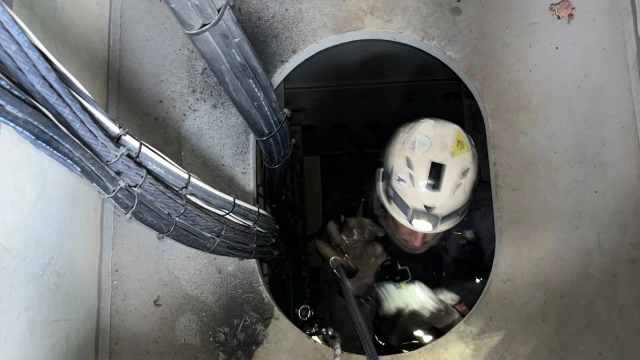
Confined Space Rescue

Why This Matters for Project Managers and Superintendents

For those responsible for authorizing confined space work, rescue readiness is not just a safety issue. It is a project risk issue. Inadequate planning can lead to rejected permits, work stoppages, enforcement actions, and unplanned delays.

When recovery planning is addressed early and correctly, permit approvals move faster and work proceeds with fewer interruptions. It also protects decision-makers by demonstrating that risks were identified and controlled in line with regulatory expectations.

Common Gaps Observed on Industrial Sites

Across industrial projects, the same issues appear repeatedly. Plans exist on paper but cannot be executed due to missing equipment or insufficient training. Assigned rescue personnel are unfamiliar with the specific space. Equipment is present but unsuitable for the depth or configuration involved.

These gaps often emerge under schedule pressure, when confined space work is treated as routine rather than high-risk. Identifying and correcting them early prevents incidents and inspection failures.

Recovery Planning in Live and High-Risk Environments

Rescue planning becomes even more critical in operating plants, ports, and infrastructure sites. Limited shutdown windows, concurrent work, and public exposure increase the consequences of failure.

In these environments, recovery capability must be integrated into overall site planning rather than treated as a standalone safety task. When done properly, confined space work can proceed safely without disrupting operations or attracting regulatory scrutiny.

For complex or high-risk sites, this work is often supported by specialized confined space and high-angle rescue teams experienced in live industrial environments.

Readiness Is What Prevents Escalation

In British Columbia, confined space recovery capability must exist before work begins, not after something goes wrong. It is defined by readiness, immediacy, and execution—not paperwork alone.

When planned and implemented correctly, this approach prevents incidents from escalating, protects workers, and keeps projects moving. Preparedness is what turns a regulatory obligation into a practical safeguard.

Wind Turbine Blade Repair: What a Rope Access Team Actually Does On Site

From the ground, wind turbine blade damage often looks minor. A small chip, a worn leading edge, or surface discoloration can appear cosmetic, especially on turbines that are still producing power. In practice, these issues are early indicators of much larger problems. Wind turbine repairs are rarely about fixing what looks broken. They are about preventing performance loss, structural degradation, and costly downtime before those failures become unavoidable.

Understanding how wind turbine repairs are actually performed on site helps project managers and asset owners plan maintenance more effectively. It also clarifies why rope access has become the preferred method for inspection and repair on operating turbines.

Why Wind Turbine Repairs Are More Complex Than They Appear

Wind turbine blades are highly engineered structures designed to operate under constant stress. They are exposed to wind, rain, hail, ultraviolet radiation, temperature fluctuations, and airborne debris every day. Over time, this exposure leads to erosion, coating breakdown, impact damage, and moisture ingress.

Even small surface defects can disrupt airflow across the blade, reducing aerodynamic efficiency. More importantly, damaged coatings allow moisture to penetrate the blade structure, accelerating internal degradation that is difficult to detect until significant damage has already occurred.

This is why wind turbine repairs are not reactive tasks. They are part of an ongoing asset protection strategy that begins with close-up assessment rather than visual assumptions from the ground.

What Wind Turbine Repairs Typically Address

Most wind turbine repairs focus on blade-related issues because blades are the most exposed and performance-critical components of the turbine. Leading-edge erosion is one of the most common problems, especially in high-wind or abrasive environments. Impact damage from debris or lightning strikes can compromise blade integrity, while coating failures expose composite materials to moisture and ultraviolet degradation.

These issues often develop gradually. By the time vibration, noise, or power loss is noticeable, damage has usually progressed beyond simple correction. Effective wind turbine repairs aim to intervene early, restoring protective systems and surface integrity before deeper structural issues emerge.

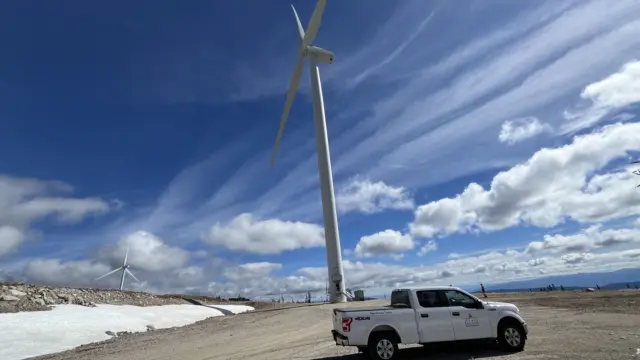
Wind turbine repair

Why Blade Inspection Is the Foundation of Wind Turbine Repairs

Blade inspection is the decision-making step that determines whether wind turbine repairs are required and how extensive they need to be. Ground-based visual checks can identify obvious damage, but they rarely provide enough information to assess severity or progression risk.

Close-up blade inspection allows technicians to evaluate erosion depth, coating adhesion, impact damage, and moisture intrusion. These findings inform repair scope, materials, and timing. In many cases, inspection reveals that damage is still within a manageable range, allowing repairs to be completed quickly and cost-effectively.

Without proper blade inspection, wind turbine repairs are based on assumptions. That uncertainty increases the likelihood of either unnecessary work or insufficient intervention.

Why Rope Access Is Used for Wind Turbine Repairs

Rope access has become a standard approach for wind turbine repairs because it provides efficient, flexible access to blade surfaces without the logistical burden of cranes or large platforms. Rope access teams can mobilize quickly, establish access directly from the nacelle, and move along the blade surface with minimal setup time.

From an operational standpoint, this reduces downtime and simplifies scheduling. Turbines do not need to be taken offline for extended periods, and repairs can often be completed within short weather windows. Rope access also allows technicians to work precisely where needed, rather than adapting repair scope to the limitations of heavy equipment.

For wind operations teams, this flexibility is critical. It allows maintenance to be planned around production priorities rather than forcing production to adapt to maintenance constraints.

What a Rope Access Team Actually Does On Site

When a rope access team arrives on site to perform wind turbine repairs, the work begins with preparation rather than repair. The turbine is secured, environmental conditions are assessed, and access systems are established to ensure technicians can move safely and efficiently along the blade.

Close-up blade inspection is typically the first active task. Technicians assess damage, confirm repair scope, and identify any additional issues that were not visible during preliminary reviews. This step often influences how repairs are sequenced and prioritized.

Repair work itself involves surface preparation, material application, and controlled curing, all performed at height. Technicians must manage tools, materials, and environmental exposure while maintaining precise application standards. Throughout the process, work is monitored to ensure repairs restore both protective and aerodynamic performance.

Once repairs are complete, the blade is inspected again to verify that the intended outcome has been achieved. This confirmation step is essential to ensure repairs will perform as expected under operating conditions.

Managing Wind Turbine Repairs Under Operational Constraints

Wind turbine repairs are always performed within constraints. Weather conditions, wind speed limits, and turbine availability all influence when work can proceed. Rope access teams must plan carefully to maximize productivity within these windows.

Effective planning accounts for changing conditions and minimizes wasted time. If weather limits access for part of the day, teams adjust sequencing to focus on tasks that can be completed safely. This adaptability reduces delays and helps ensure repairs are completed within planned maintenance periods.

For asset owners, this approach translates into predictable outcomes. Repairs are completed without extended shutdowns or last-minute schedule changes that disrupt operations.

Quality Control During Wind Turbine Repairs

The success of wind turbine repairs depends on more than completing the work. It depends on verifying that repairs meet performance requirements and will withstand operating conditions over time.

Quality control includes post-repair inspection, documentation, and confirmation that surface integrity has been restored. This step ensures that repairs address root causes rather than symptoms and reduces the likelihood of repeat work in future maintenance cycles.

For project managers, quality verification provides confidence that repairs will deliver long-term value rather than short-term fixes.

Peak Access Wind turbine repair British Columbia

Common Misunderstandings About This Type of Repairs

One common misconception is that small blade damage can be safely ignored. In reality, minor defects often accelerate erosion and moisture ingress, increasing repair scope later. Another misunderstanding is that all wind turbine repairs require cranes, leading to unnecessary delays or deferral of work.

There is also a tendency to treat blade inspection as optional rather than essential. Without accurate inspection, repairs are either over-scoped or underperformed, both of which carry cost and risk implications.

Understanding what actually happens during wind turbine repairs helps correct these assumptions and supports better maintenance decisions.

When Wind Turbine Repairs Should Be Scheduled Versus Deferred

Not all damage requires immediate repair, but deciding when to act requires accurate information. Blade inspection findings guide whether repairs should be performed immediately, scheduled for the next maintenance window, or monitored over time.

Deferring the wrong type of damage often increases long-term cost and downtime. Early intervention, when repairs are still localized, is typically faster, less disruptive, and more effective.

This lifecycle approach aligns maintenance activity with asset performance goals rather than reactive responses.

These Repairs Are About Access, Timing, and Execution

Our rope access wind energy services are not simply technical tasks performed at height. They are coordinated maintenance activities that depend on accurate blade inspection, efficient access, and disciplined execution on site.

Rope access teams enable this process by reducing downtime, improving inspection accuracy, and delivering repairs within operational constraints. For asset owners and project managers, understanding what actually happens during wind turbine repairs supports better planning, fewer surprises, and longer-lasting assets.

When repairs are approached as preventive maintenance rather than emergency response, turbines stay productive longer—and maintenance becomes a controlled process instead of a disruption.

How Rope Access Concrete Repair Works on High-Angle & Over-Water Structures

Why High-Angle Concrete Repair Requires a Different Approach

Concrete deterioration rarely happens where access is easy. On bridges, marine structures, and elevated infrastructure, damage often appears on soffits, piers, columns, and vertical faces that are difficult to reach and even harder to repair without disruption. These are environments where gravity, exposure, and access constraints fundamentally change how concrete work must be planned and executed.

High-angle concrete repair is not simply standard concrete repair performed higher off the ground. The angle of the work, the surrounding environment, and the consequences of falling debris introduce challenges that demand a different approach. On over-water and live-traffic structures, traditional access methods such as scaffolding, lifts, or barges can be slow to mobilize, costly, and disruptive to operations. This is why rope access concrete repair is increasingly used, not as a shortcut, but as a way to control risk, reduce downtime, and execute repairs precisely where they are needed.

What High-Angle Concrete Repair Typically Addresses on Infrastructure

High-angle concrete repair most often deals with deterioration caused by environmental exposure and long-term service conditions. On bridges and elevated structures, water infiltration, chloride exposure, freeze-thaw cycles, and carbonation can lead to cracking, spalling, and exposed reinforcement. Over time, these issues compromise both durability and safety.

Because these defects frequently occur on undersides or vertical faces, they can progress unnoticed. Visual inspections from the ground may identify symptoms, but they rarely reveal the true extent of damage. By the time deterioration becomes obvious, repair scopes are often larger and more complex than they would have been with earlier intervention. Effective high-angle concrete repair focuses on addressing deterioration before it escalates into structural or operational risk.

Why Inspection Drives High-Angle Concrete Repair Decisions

Inspection is the starting point for any successful high-angle concrete repair strategy. Close-access inspection allows engineers and repair teams to assess the extent of cracking, delamination, corrosion activity, and material loss directly at the repair surface. This level of access is critical for determining whether repairs are localized or symptomatic of broader deterioration.

Rope access enables inspectors to evaluate concrete conditions without the delays associated with large access systems. This makes it possible to gather accurate information quickly, which supports better decision-making around repair methods, materials, and sequencing. Without proper inspection, high-angle concrete repair risks becoming reactive, addressing visible damage while underlying issues continue to develop.

Why Rope Access Is Used for High-Angle Concrete Repair

Rope access has become a preferred access method for high-angle concrete repair because it minimizes the footprint required to reach complex locations. Technicians can access vertical, inverted, or over-water surfaces directly, without the need for extensive scaffolding or heavy equipment.

From a project perspective, this approach reduces mobilization time and limits disruption to traffic, waterways, and surrounding operations. Rope access concrete repair also allows teams to adapt quickly to changing site conditions, which is particularly important on exposed structures where weather and access windows can shift unexpectedly.

Rather than dictating how repairs must be performed, access becomes a flexible tool that supports efficient execution.

How Rope Access Concrete Repair Is Performed On Site

Once a rope access team mobilizes, the work begins with establishing safe and controlled access to the repair area. Systems are installed to allow technicians to move efficiently while maintaining continuous protection. In high-angle and over-water environments, additional controls are implemented to manage debris and protect surrounding areas.

Concrete repair itself follows the same fundamental principles as ground-level work, but execution is adapted to the vertical or inverted orientation. Deteriorated concrete is removed carefully to expose sound substrate and reinforcement. Corroded steel is cleaned and treated, and repair materials are applied in a manner that ensures proper bonding and curing despite gravity and exposure.

Throughout the process, technicians must manage materials, tools, and environmental conditions simultaneously. This requires coordination and experience, as improper sequencing or curing can compromise repair performance. Rope access concrete repair is therefore as much about execution discipline as it is about access.

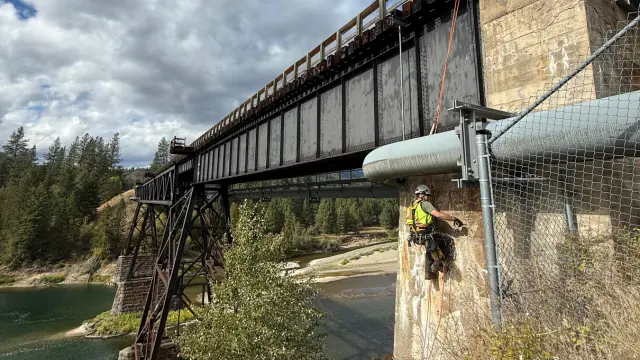
High-angle concrete repair on bridge using rope access above water without scaffolding

Managing High-Angle Concrete Repair Over Water and Live Environments

Over-water structures and live infrastructure introduce additional complexity to high-angle concrete repair. On bridges and marine assets, debris containment is critical to protect waterways, vessels, and ecosystems. Traffic management and public safety considerations further constrain how and when work can occur.

Rope access reduces many of these challenges by limiting the amount of equipment suspended over water or active corridors. With fewer materials and structures required, the risk of accidental drops or environmental impact is reduced. This makes rope access particularly well suited for bridge repair projects where maintaining operations is a priority.

Careful planning and coordination remain essential, but the reduced footprint of rope access allows work to proceed with fewer external dependencies.

Quality Control and Longevity in High-Angle Concrete Repair

Ensuring repair quality is especially important when work is performed at height. Post-repair inspection confirms that repairs have been executed correctly and that materials have cured as intended. Documentation of repair conditions and outcomes provides a record that supports future maintenance planning.

High-angle concrete repair is often undertaken to extend asset life rather than achieve cosmetic improvement. Quality control ensures that repairs address root causes of deterioration and deliver long-term performance. Without this verification, repairs may need to be repeated sooner than expected, increasing lifecycle cost.

Common Misconceptions About High-Angle Concrete Repair

A common misconception is that all bridge repair and elevated concrete work requires large scaffolding systems. In many cases, this assumption leads to unnecessary delays and higher costs. Another misunderstanding is that rope access limits the quality or durability of repairs. In reality, when performed correctly, rope access concrete repair meets the same technical standards as traditional methods.

There is also a tendency to view high-angle repairs as temporary measures. While some repairs are interim by design, many rope access repairs are permanent solutions that restore structural performance and durability.

Understanding how the work is actually executed helps dispel these assumptions.

When High-Angle Concrete Repair Should Be Performed Versus Deferred

Not all concrete deterioration requires immediate intervention, but deciding when to act depends on accurate assessment. Inspection findings guide whether repairs should be executed promptly or scheduled as part of a planned maintenance cycle.

Deferring certain types of damage, particularly on over-water or exposed structures, can accelerate deterioration and increase repair scope later. Early high-angle concrete repair often reduces long-term cost and minimizes disruption by addressing issues while they remain localized.

High-Angle Concrete Repair Is About Access, Control, and Execution

High-angle concrete repair demands more than technical knowledge of concrete materials. It requires an approach that integrates access planning, environmental control, and disciplined execution under challenging conditions. Rope access concrete repair enables this work to be carried out safely and efficiently on bridges, marine structures, and elevated assets.

For project managers and asset owners, understanding how these repairs are actually performed supports better planning, more realistic scheduling, and fewer surprises during execution. When access and execution are aligned, high-angle concrete repair becomes a controlled maintenance activity rather than a disruptive event.